Overview
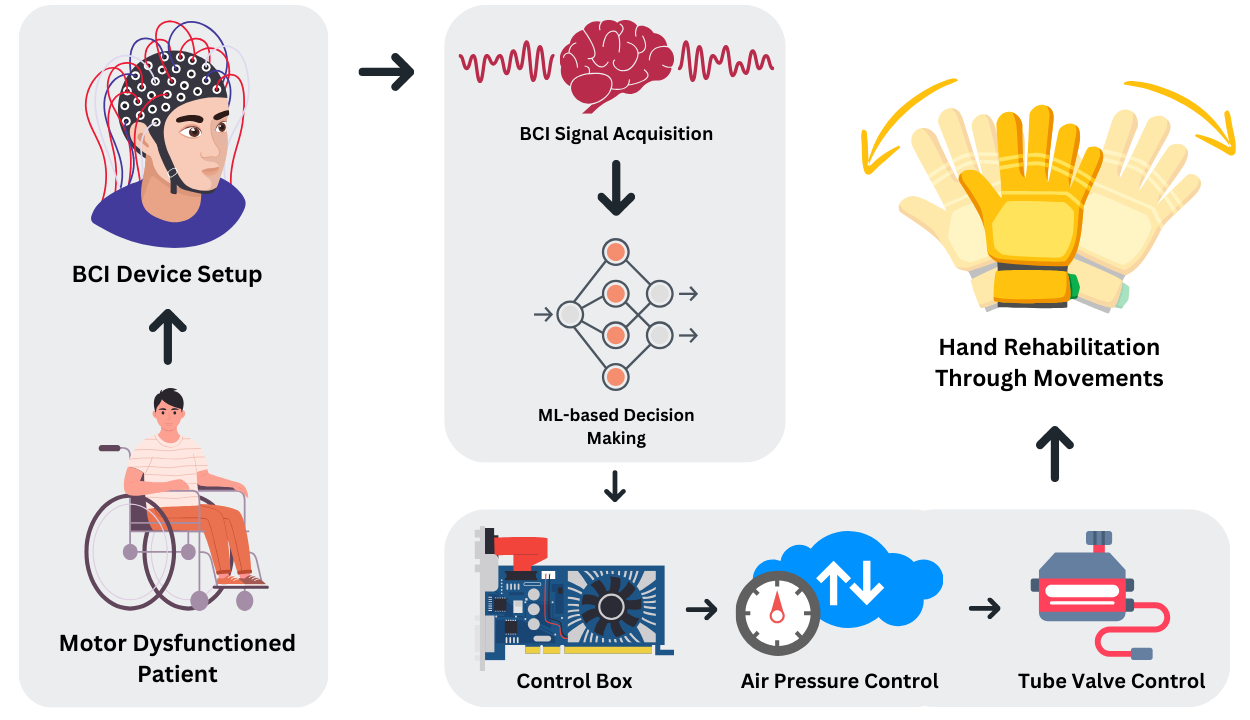
Stroke and other neurological conditions can leave people unable to move their hands. Conventional rehabilitation, such as functional electrical stimulation, is expensive and usually needs a clinic. This project builds a soft robotic glove that a patient can use at home, driven by their own brain activity.
What we built
- Brain signal acquisition. EEG electrodes pick up the patient’s motor intent, and an amplifier prepares the signal.
- ML decision making. A machine learning model decodes the intended movement and adapts the assistance to the individual patient.
- Control box. A microcontroller turns the decoded intent into commands for an air pump and valves.
- Fabric-based soft glove. Fibre-reinforced pneumatic actuators bend each finger, giving a light and comfortable glove that can be reused.
Goal
Closing the loop between brain and hand may help the brain form new connections around damaged areas. The aim is a personalised, affordable rehabilitation device for Bangladesh and other lower-income settings, tested with healthy volunteers and patients under ethical approval.